AkzoNobel

SikkensFoundation

Home

Back to homepage

back to home

SikkensFoundation

Projects

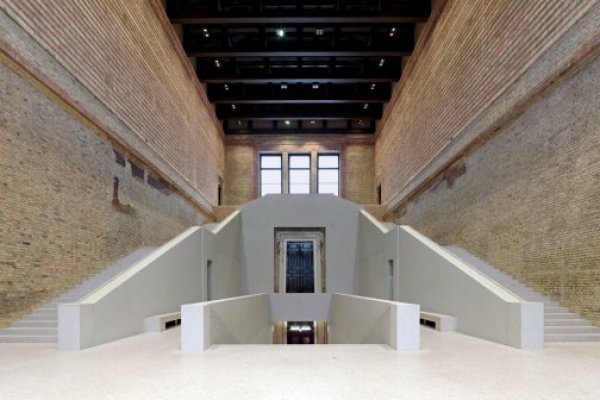
RECONSTRUCTION OF MONDRIAN’S STUDIO — BERLAGE STOCK EXCHANGE, AMSTERDAM 1994 — n December 1994, the exhibition opened in the Berlage Stock Exchange showing the reconstruction of Mondri- an’s studio in the Rue du Départ in Paris. The Sikkens Foundation contributed to the preliminary color studies and the paintwork. Pieter Cornelis Mondrian was a Dutch painter and art theorist who lived and worked abroad for a large part of this life. Mondrian is generally seen as a pioneer of ab- stract and non-fgurative art. In particular, his later geo- metric abstract work, with the characteristic horizontal and vertical black lines and primary colors is world fa- mous and served as a source of inspiration for many ar- chitects and designers of applied arts. He was one of the most important contributors to the journal De Stijl, and developed his own art theory which he called Nieuwe Beelding or Neo-plasticism. Back to index

Mondrian moved to Paris in 1912. For most of those years he lived and worked in the studio at 26, Rue du Départ in the Montparnasse district. His studio was more for him than just a place to live and work. He used the space to highlight his views about the relationship between painting and architecture according to the rules of Neo-plasticism. From the 1920s, Mondrian covered the walls of his studio with painted rectangles, in accor- dance with the principles of Neo-plasticism. In this way he aimed to clarify one point: in his view, the combination of painting and architecture in accordance with the princi- ples of Neo-plasticism could exclusively be achieved in a space designed by the painter himself. A number of his abstract paintings hang on the wall de- signed in this way. At the entrance there are three mir- rors, and opposite there is a large black painter’s easel. Mondrian did not use this easel, he usually painted on the table or on the ground. The painter’s easel was part of the artwork as a whole which was his studio: the pain- ting standing on the easel corresponded to the wall he had created through the three mirrors. Download text as pdf