
SikkensFoundation
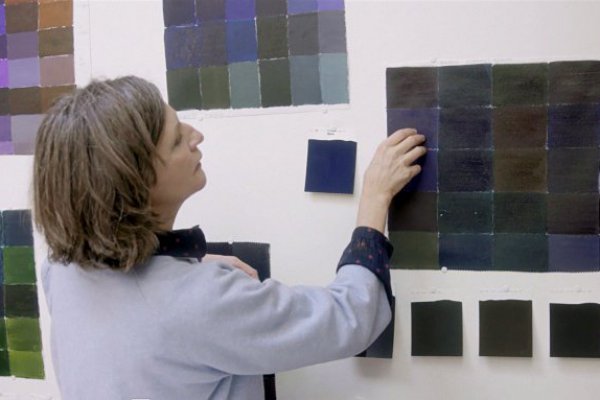
1989 ORIOL BOHIGAS — For his role as the supervisor of the reconstruction and urban development of Barcelona, for his historical archi- tectural research with which he returned to the city an awareness of its rich architectural heritage, and for the important role which he attributed to art, philosophy and literature in the understanding, interpretation and organi- zation of public space. — This year witnessed the involvement of the Sikkens Foundation in the urban development of Barcelona. The interest of the Foundation corresponded to the aim of the “Cam-panya per a la Millora del Paisatge Urbà” (Cam- paign for the improvement of the urban landscape), which was established in 1986. This office, which was established by the municipality of Barcelona, promoted and organized a sort of project adoption system, in which large companies and institutions could assign funds to the restoration of particular monuments or parts of the ci- ty. The dynamics of “La Campanya” released an unparal- leled amount of money in industry for the restoration of the city. one of those companies was Akzo Coatings Spain (Pinturas Procolor) which signed an agreement to participate in the large color plan for Barcelona, coordi- nated by “La Campanya”, in January 1989, following the mediation of the Sikkens Foundation. This “Proyecto del plan del color” for which the color plan of Turin served as a stimulus, not only applied to buildings, but also in- volved urban elements, such as, for example, street fur- niture and public transport. The project “Els colors de la Rambla” was a direct com- mission by the Sikkens Foundation. This was the investi- gation of the original colors of the buildings on Barcelo- na’s famous promenade from the Plaza de Catalunya up to the harbor front. It served as a pilot project for the co- lor plan for the whole of Barcelona. The examination started in 1988 and was carried out by a project group consisting of a number of Spanish architectural historians and colorists managed by Professor Josep Emili Hernàn- dez-Cros. The Sikkens Foundation supported the re- search with expertise gained in the project in Turin, amongst other places, and therefore it was not surprising that the Rambla color investigation was very similar to the approach adopted by Tagliasacchi and Zanetta. In his contribution on Barcelona in The Colour of the City, (Ta- verne/Wagenaar eds., Laren 1992) Hernàndez-Cros des- cribes how he managed to reconstruct the original colors in cooperation with other researchers on the basis of do- cuments (original designs), historical sources (the histori- cal development of the Rambla), building permits, techni- cal documents, (regulations on color and so on), as well as the practical research into the materials in situ, and was able to draw up a color plan on this basis. One im- portant discovery was a color card dating from 1829, which related to part of the Rambla. The prescribed co- lors for the outer walls were light pink, a greenish yellow, a grey/ochre and a straw-colored yellow – soft, natural hues which were probably based on regional rocks being used in the construction at the time. The color card for the Rambla composed by Hernàndez-Cros and his team in the end consisted of 26 colors for plaster facades, ele- ven for the plaster and seven colors for a graffito finish. The completion of this plan served as a subtle facelift, re- taining the characteristic traits. For architectural histori- ans and other parties involved it went beyond this: it was the exciting illusion of having recreated the past. Download text as pdf
Back to index