SikkensFoundation
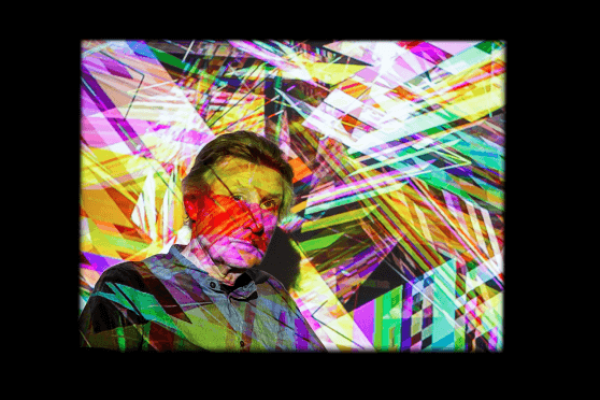
1969 JOSEF SVOBODA — For his theatre sets and for his work in the Czech Pavili- on at the 1967 World Fair in Montreal. — On 10 october 1969, the Sikkens Prize was awarded to Professor Josef Svoboda, a theatre set designer from Prague, in the Stedelijk Museum. It is the first and only time that theatre design, one of the fields covered by the Sikkens Prize, was awarded a prize. Svoboda is certainly an exceptional set designer and made such an impact that his innovations and discoveries are part of our sha- red heritage nowadays. When he was awarded the Sik- kens Prize in 1969 he had recently attracted international fame with his theatrical scenes in the Laterna Magika Theatre in Prague and with his audiovisual project in the Czech Pavilion at the 1967 World Fair in Montreal. Svoboda completely broke away from traditional set de- sign with his static decors which imitate reality. He used unorthodox materials in abstract constructions with ad- vanced techniques. He applied photographic and film projection and used colored spotlights to create an at- mosphere. He created depth and gave a sense of space using rays of light, worked with moveable panels and ex- perimented with light on individual mirrors and planes of corrugated rubber. Back to index
It is precisely because of this other discipline that there is a striking correspondence with previous prizes and an in- terrelationship can be perceived. Svoboda’s theatrical scenes are transformed in terms of space and atmosphe- re, as the action takes place. This process-based appro- ach, this experience shown in time, corresponded to the developments in the visual arts. Svoboda also referred to the fourth dimension in his lecture which was published in the architectural journal Plan. He wrote that in contem- porary set design the components of time, space, rhythm and light become synthesized. The factor of space/time, color/light, the representation of processes, rather than a static image, movement and the fourth dimension, are recurring elements in modern art, certainly as regards the choice of the commission for the Sikkens Prize. Forms of this can be found in the experi- ence of space presented by Agis and Jones, the photo- graphic paintings and chrono paintings of Livinus, the spatial colorism of Aldo van Eyck and Constant, in the work of Peter Struycken, and Joost Baljeu. Even Riet- veld’s vision of space, light and color, which he spoke about in his lecture upon receiving the first Sikkens Prize, can be seen in this sort of context. Download text as pdf