AkzoNobel

SikkensFoundation

Home

Back to homepage

back to home

SikkensFoundation

Sikkens Prize

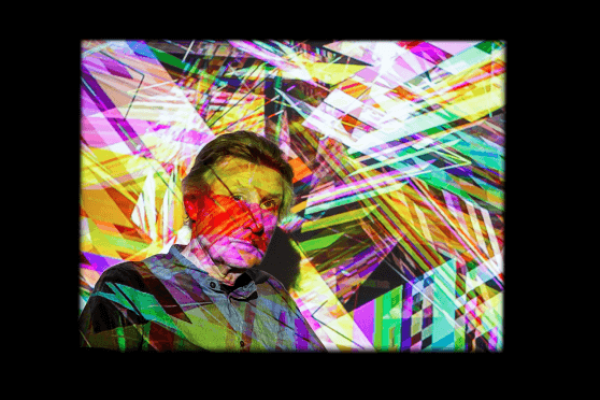
1966 PETER STRUYCKEN — For his intensive research, both theoretical and visual, in- to the laws governing the relationship between form and color. — Struycken explained that form and color can be organi- zed in such a way that they are connected to other forms and colors via series that can be visually experienced. The impression of a series of forms or colors develops over time, like the successive images in a film. Every mo- ment in a series is optically and logically related to the moment before and afterwards. There is a direction, a possibility of orientation and interconnection. Series of forms and colors could be applied in architecture, urban planning and road construction. Form and color could be interrelated, for example, by matching the least striking color with the least striking form and the most striking color with the most striking form, and everything in between. A relationship develops because of the number and the way in which they are positioned. These sorts of series result in diverse expres- sions such as: static-dynamic, striking-silent, open-shut, fat-spatial, mass-surface. Struycken also saw possible applications in this respect, such as giving an identity to the masses and structures in architecture or the arrange- ment of objects in our everyday environment. Struycken’s aim was to banish subjectivity, which always plays a role, even in geometric-abstract art. This was ex- plained as follows: when you draw squares and you lea- ve out a line, the squares remain because your mind au- tomatically completes the line that has been left out. The same applies for series of colors. In a series from white to black it is possible to leave out grays, which are then “flled in” by the mind. Peter Struycken concentrated on this law and used this principle in his painting. Back to index Download text as pdf